Advertorial in partnership with Jumpspeak.
The Method That Got My 70-Year-Old Father Speaking Spanish in Six Months — After a Lifetime of "I'm Too Old for This"
He hadn't studied a language since 1968. Everything I believed about the aging brain turned out to be wrong.

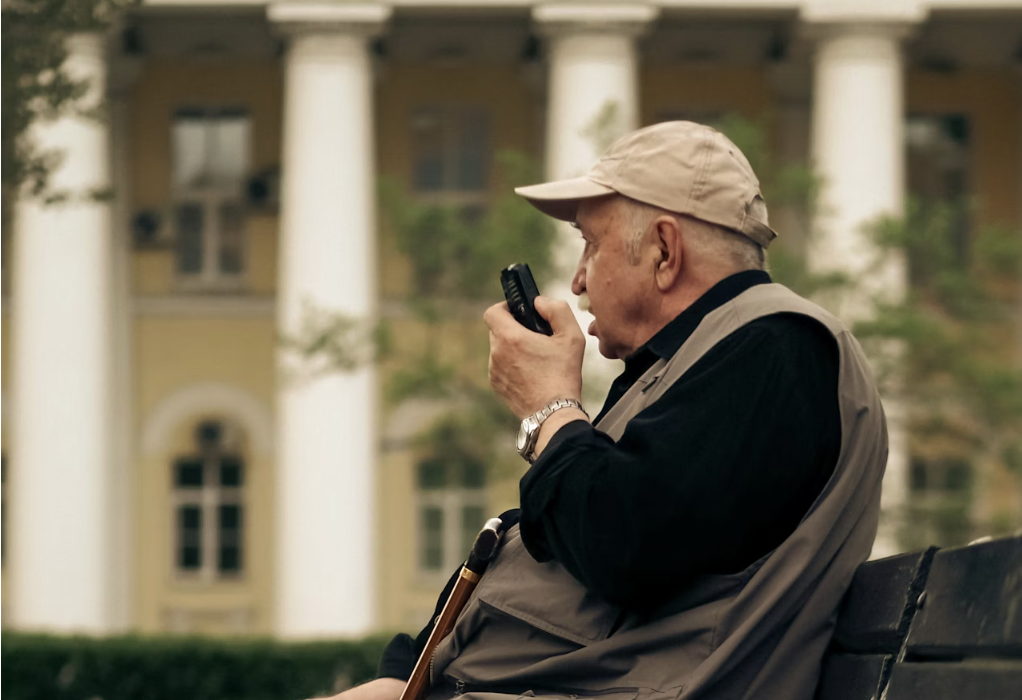
My father turned seventy the year he decided to learn Spanish.
Six months later, I watched him sit at a kitchen table in Guadalajara and have a real conversation with my wife's mother — in her language.
Not pleasantries. A real conversation. He asked about the village outside Jalisco where she grew up. He asked about her sister. He apologized, in Spanish, for taking so many years to be able to say any of this.She put her hand over her mouth. Then she started to cry. Then he did.
And I stood in the doorway of that little kitchen holding a bowl of limes like an idiot, crying too, because I had spent three years watching this exact woman and this exact man sit four feet apart at family dinners with nothing but a wall of silence between them.
For two full days afterward I couldn't stop turning it over: how did this actually happen?
Because I know this man. Someone who hadn't studied a language since high school French in 1968. Someone who, three years earlier, had sat through a week of family dinners in Mexico smiling politely at jokes he couldn't follow, nodding at stories he couldn't understand, shrinking a little more with every course.This is the story of how he closed that gap in six months. And why, if you've ever believed you left it too late, the timeline is a lot shorter than anyone told you.
Let me take you back three years, because you can't understand what happened in that kitchen without it.
The first time my father came to Mexico with us, he was sixty-seven. It was supposed to be the good trip — the one where he finally met my wife's whole extended family, the aunts and cousins and the ninety-year-old great-uncle everyone orbits around.
And for a week, my father sat at the edge of every gathering like a piece of furniture.I watched it happen meal after meal. The table would erupt in laughter and he'd smile a half-second late, the way you do when you're pretending you got it.
Someone would turn and ask him something warm and direct, and he'd look to me or my wife to translate, and by the time we did, the moment had moved on.
He spent the week being talked about in the third person, three feet away, in a language he couldn't reach.On the flight home, somewhere over Texas, he said something I've never been able to forget."I felt invisible the whole time."He didn't say it bitterly.
He said it the way you state a fact about the weather. And that's what got me — that he'd already accepted it. Filed it under things that are simply true about me now.And here's the part I didn't understand until later: he'd been feeling invisible in a lot of places that year.
His closest friend of forty years had died in the spring. His younger sister died that same autumn. He'd retired the year before, after a lifetime of being the man everyone relied on — and then, all at once, the phone stopped ringing. What was left was a good man in a quiet house, staring at a calendar that used to be full and was now just a grid of empty squares.
The silence at those Mexican dinners wasn't really about Spanish. It was one more room he'd been quietly locked out of, in a year where he was getting locked out of a lot of them.For two years after that trip, nothing changed. He didn't mention Spanish. I didn't push.
You don't tell a seventy-year-old grieving man he should take up a new language — it sounds like a cruelty, like handing someone a mountain when they can barely get up the stairs.Then one morning in October, out of absolutely nowhere, he called me.No hello.
He just said: "I'm going to learn Spanish. I don't want to be the man in the corner anymore."I want you to understand what that sentence cost him.
This is a man of his generation — you did not talk about feelings, you did not announce your soft spots, and you certainly did not sign up to be a beginner at seventy at something young people find easy.
Admitting he wanted this meant admitting the corner had hurt. It meant risking failing at it out loud, at an age when most people have made a quiet peace with the doors they think have closed.I said something encouraging and mostly didn't believe it would last a month.
I'd watched him start and quit things that year. Grief does that — it starts fires it can't tend.I was wrong. But not for the reason I thought. It wasn't that he had more willpower than I gave him credit for. It's that, for the first time, he found a method that didn't punish him for being seventy.
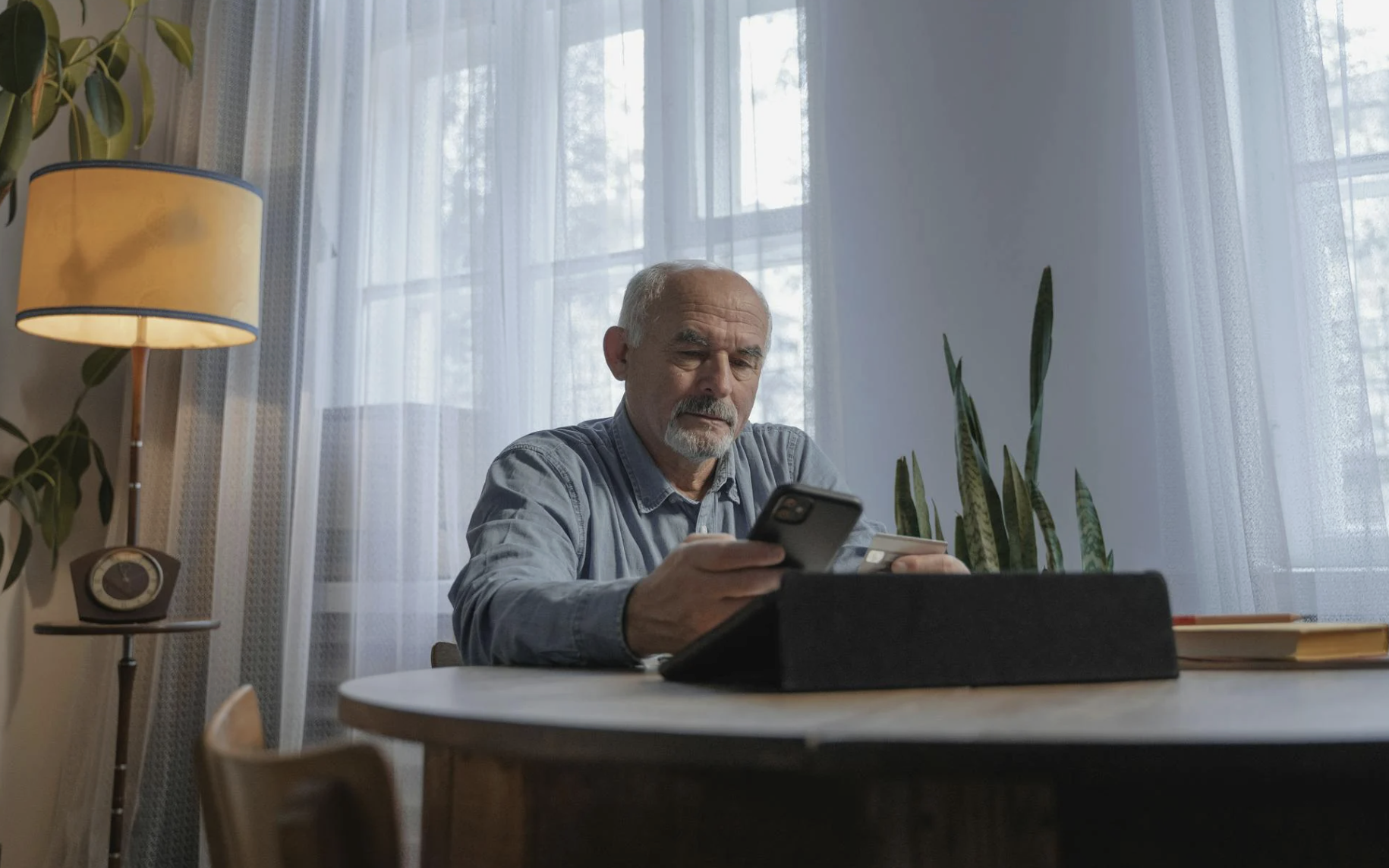
What Most People Get Wrong About the Aging Brain
Here's the thing about my father at seventy, and about everyone you know over fifty: most of what we believe about the aging brain is decades out of date.
The myth is that the brain is a fixed asset that depreciates after a certain age. That if you didn't learn a language by twenty-five, you missed your window.
Modern neuroscience has been quietly demolishing this picture for fifteen years. The adult brain remains plastic — capable of forming new pathways, acquiring new skills — far later in life than anyone believed. The famous "critical period" for language learning turns out to be much narrower than originally framed: it applies primarily to accent, not to the broader ability to become fluent.
Older learners actually have advantages younger ones don't. Richer vocabulary in their first language, which gives them more mental hooks for new words. Better metacognition — they understand how they learn. More patience. More practice at being a beginner.
What older learners don't have is time to waste on methods that don't work.
This, I think, is the real reason most adults quit. Not because they can't. Because the conventional methods — flashcards, grammar drills, vocabulary apps — were designed for classrooms full of nineteen-year-olds. For a seventy-year-old with finite time, watching yourself fail to retain conjugations week after week isn't motivating. It's humiliating.
The window doesn't close because of age. It closes because of method.
Let me be specific, because "the method is wrong" is easy to skim past.
My father tried the usual suspects first, and I watched each one fail him in a slightly different way.He started, like everyone does, with Duolingo.
He built a little streak. He tapped the tiles every morning with his coffee. And here's what I noticed after a few weeks: he was getting genuinely good at recognizing Spanish words on a screen — and no better at all at saying one out loud. Because that's what the app trains. Tap the matching picture. Pick the right word from four options. It felt like progress because the streak number climbed.
But a streak measures one thing: that you opened the app. It has never once measured whether you can speak. And here's the uncomfortable part — the app earns its money when you keep opening it, not when you graduate. The day you're fluent is the day you delete it. Nothing about that is built to get a seventy-year-old man talking to his daughter-in-law.Then he tried a grammar book. Rules, tables, exercises.
He could fill in the blanks perfectly at the kitchen table. But rules don't fire when a real human is standing in front of you waiting — nobody flips to chapter nine mid-conversation. It prepared him for a test he was never going to take.
He looked at a local class. Twelve teenagers and him, once a week, moving at the pace of the slowest homework. He didn't sign up. He told me, quietly, that he didn't want to be the old man holding up the room.
Every one of these has the same flaw, and it's the one that matters most past sixty: none of them ever ask you to speak.
They build the part of your brain that understands language and completely ignore the part that produces it.
So you end up exactly where my father was after a month — recognizing more and more words, and just as unable as ever to open your mouth and use them.For a nineteen-year-old with a decade of free evenings, that inefficiency is survivable. For a seventy-year-old who can feel the clock, it's the whole ballgame.
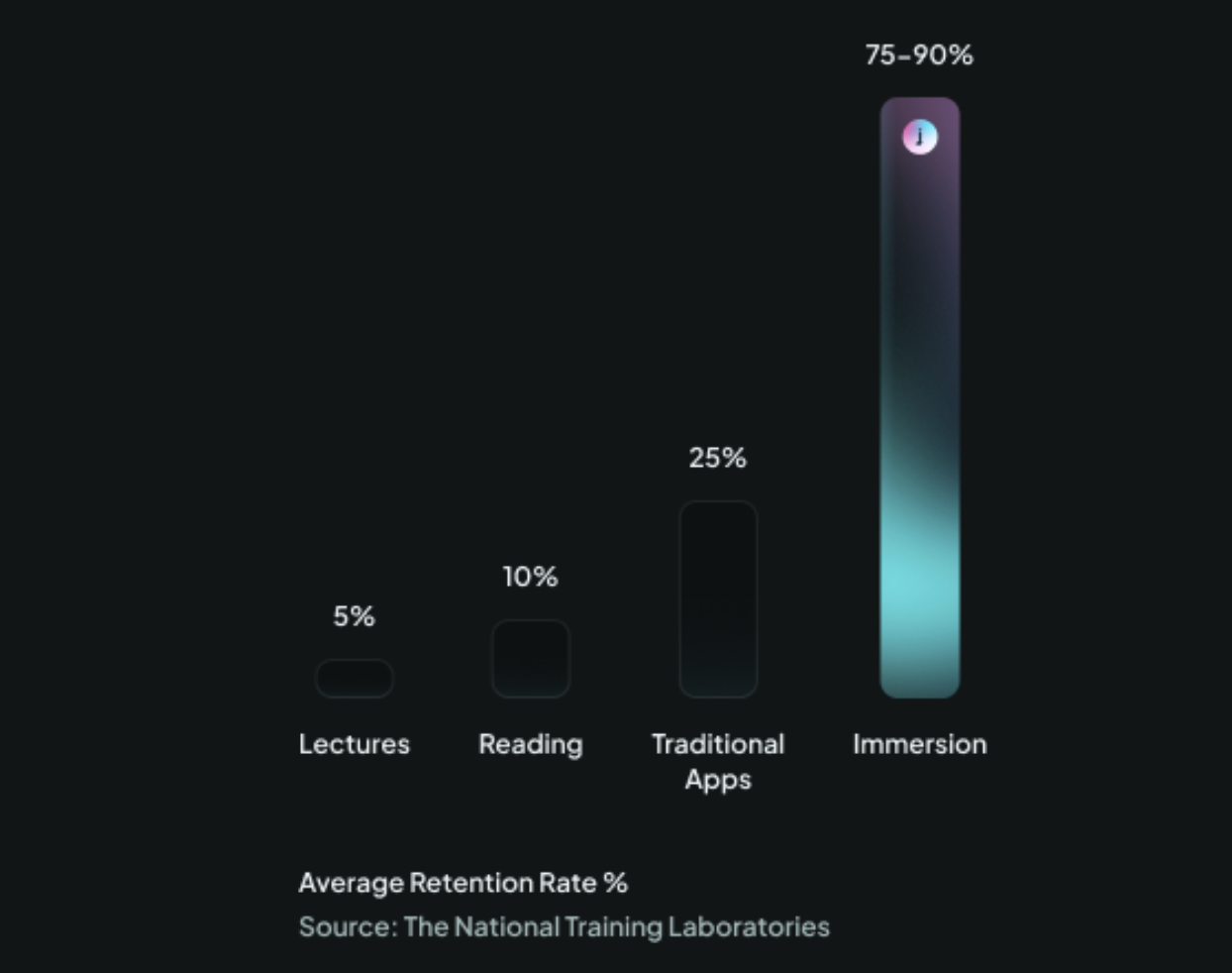
The Immersion Method
My father is methodical. He spent two weeks researching how adults actually acquire a second language. What he came back with was a thesis: he didn't want to study Spanish. He wanted to speak it. Out loud, badly at first, constantly, with real responses coming back.
This turns out to be what the research actually supports. The single biggest predictor of fluency in adult learners isn't hours studied — it's hours spoken. Reading and listening build comprehension; speaking builds production. The gap between the two is the cliff almost every adult learner falls off.
The problem is that for most adults, finding someone to speak with — patiently, daily, on demand — is nearly impossible. Tutors are expensive. Conversation partners are unreliable. And nobody wants to fumble their first ugly attempts at a new language in front of their suegra.
This is the gap he needed to solve. The way he solved it was an app called Jumpspeak.
What sold him on it was that the app was built around speaking from the first day, not the fiftieth. Instead of teaching him about Spanish, it had him speaking Spanish — out loud, into his phone — within the first session. The AI on the other side responded to him, corrected him, pushed him into actual conversations. It didn't matter that his accent was terrible. It didn't matter that he made mistakes. The app didn't roll its eyes. It just kept giving him chances to try again.
He did this for twenty minutes every morning. Coffee, kitchen table, phone in hand, talking to himself in Spanish in an empty house. My mother would come down and find him having a conversation with no one, in a language she didn't understand, and she told me she fell in love with him a little bit all over again.
He didn't miss a day. Not one. For six months.
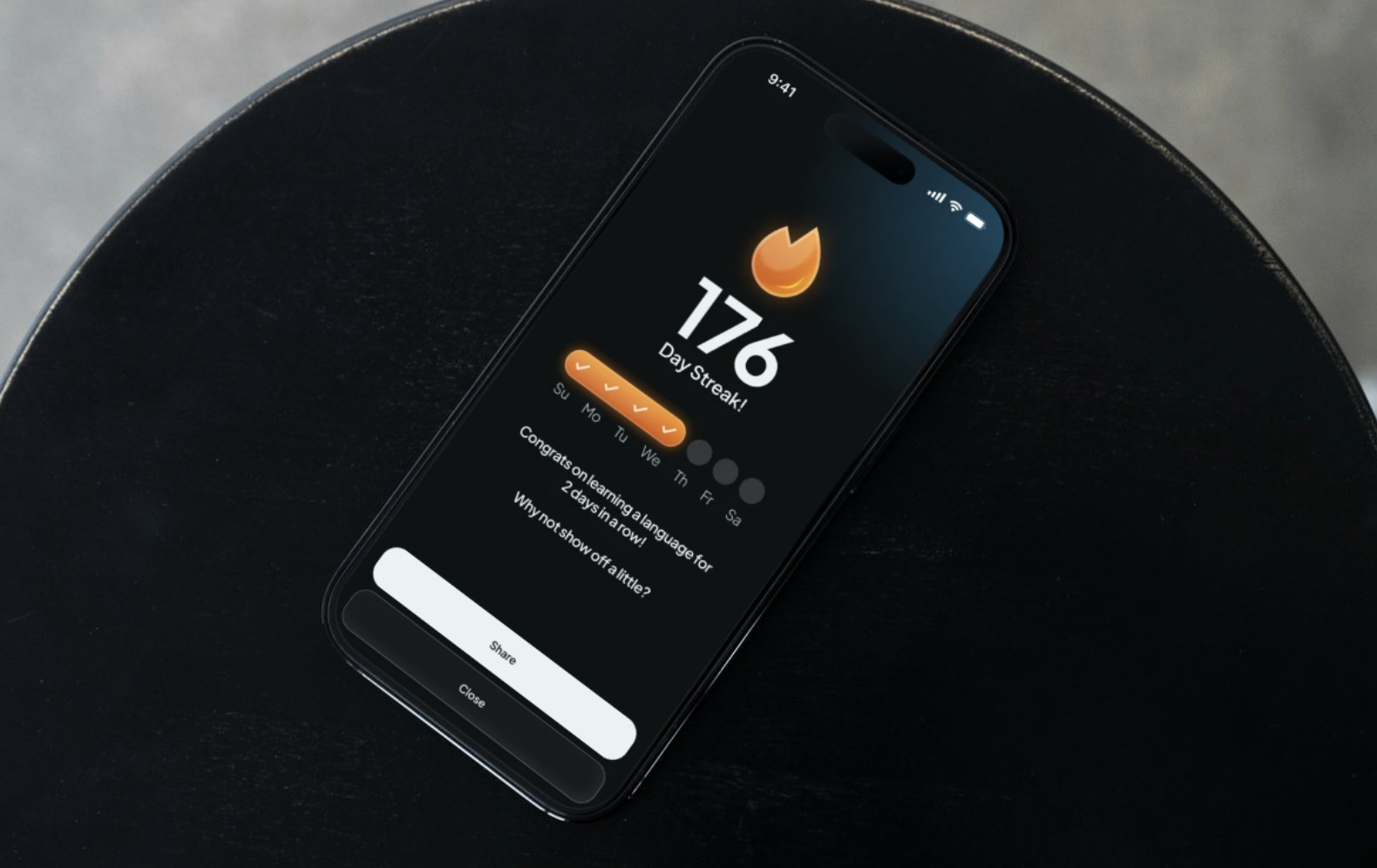
You just have to start speaking
Six months later, we flew to Guadalajara.
My suegra is a small woman who survived a hard early life and built a family out of stubbornness and love. She had been polite to my father for years — warm, but in the way you're warm with someone you can't really talk to. A glass wall.He walked into her kitchen, took both her hands, and said something to her in Spanish. I didn't catch all of it. But I caught the part where he asked about her sister, and the part where he said he was sorry it had taken him so long to come back.
She froze. Then she looked at me, then back at him, then she started crying. She kissed him on both cheeks and held onto his hands like she was afraid he'd disappear if she let go. "Por fin," she kept saying. Finally.
They talked for two hours. I don't know about what. I left them alone in the kitchen with the pot of pozole she'd made and the afternoon light coming through the window.
On the flight home, my father told me something I've been thinking about ever since. He said: "I spent seventy years believing I was too old to start something new. I wasted a lot of years on that belief."I think most of us are wasting years on it right now.
The version of yourself that can have the conversation you've been avoiding — with your in-laws, with your grandparents, with the version of the world you've been polite to but never really entered — that version is closer than you think.
You just have to start speaking.
.png)
Try Jumpspeak for 100 days
Jumpspeak is the speaking-first language app my father used. You can take a free assessment to find out if it's for you, and they'll build you a personalized 100-day plan. 78% of users report to improving their speaking skills in the first 3 weeks, and it's backed by a 100-day money-back guarantee. If you're not having real conversations by then, you don't pay.
So let me talk to you directly for a moment — especially if you recognized someone in this story. Maybe a parent. Maybe yourself.
You are not too old. That belief isn't a fact about your brain; it's a story you were handed by methods that failed you and let you take the blame. My father is proof, and he was starting from a harder place than most — grieving, retired, twenty years out of practice at learning anything.Here's what the next hundred days can look like, because I watched them happen:
Day one: you say a full sentence out loud. It'll be bad. It doesn't matter — the point is the mouth starts moving.
Week one: you've already spoken more of the language than in any class you ever took.
Week three: you stop translating in your head. Words start arriving on their own.
Day one hundred: you're having real conversations. Not drills. Conversations.
And here's the part that made it safe enough for my careful, cautious father to even begin: Jumpspeak comes with a 100-day money-back guarantee.
You take a free assessment, they build you a personalized 100-day plan, and if you're not having real conversations at the end of it, you don't pay.
That's over three months to find out — at zero risk — whether the thing standing between you and that conversation was ever your age at all.Think about what he actually spent. Twenty minutes a day. Less than the cost of a couple of restaurant dinners.
Against six months that gave him back a room he thought was closed to him for good — and gave an eighty-one-year-old woman the grandson-in-law she'd never gotten to meet.
If that person in the corner is your mother, your father, your husband — send them this. And if the person in the corner is you: the version of you that can have the conversation you've been avoiding is closer than you think.You just have to start speaking.

I am loving Jumpspeak! Within a week of using it, my Spanish comprehension is improving. The unique thing about this app is that it creates a life-like conversation where you listen, then respond. Just like a real conversation, with AI feedback.

Daniel Dirk

Jumpspeak is something I wish existed for awhile. I first tried Duolingo and it lacked real use cases. With Jumpspeak, you can actively practice real-life conversations, which I must say is a very effective way to learn. I highly recommend Jumpspeak!

Sébastien Lamanna
I used to feel shy & intimidated speaking French to strangers. Jumpspeak has helped me feel more confident within the first month, and it is the best thing I've found to learn a new language. So many other apps use traditional methods, but don't help you speak it.
Yvette Nichols
I tried many different language apps in the past, but I couldn’t speak fluently. Jumpspeak is different because it actually lets me talk and respond like real conversations. After 3 weeks, I already feel more comfortable introducing myself and asking questions in English.
.jpg)
Wendy Wong 🇨🇳
"I went from B1 (Intermediate) to C-level (Advanced) after using Jumpspeak. I saw an immediate difference."
-Jazmine Kempin
"I started as a beginner, and now I can confidently say I'm an Intermediate speaker. This is 100% thanks to Jumpspeak."
-Mark Holmes
"I've honestly tried every language app out there, but Jumpspeak is the most innovative, natural, and conversation-based app I've ever used."
-Dr. Leslie Lundt, MD
AS SEEN ON
The Fluent Report is operated by Growth Studio, LLC. This is advertorial content produced in partnership with Jumpspeak. Individual results vary. Information on this site is for educational purposes and should not be interpreted as medical, legal, or financial advice. By using this site, you agree to our Terms of Service and Privacy Policy.